15 Jul 2026
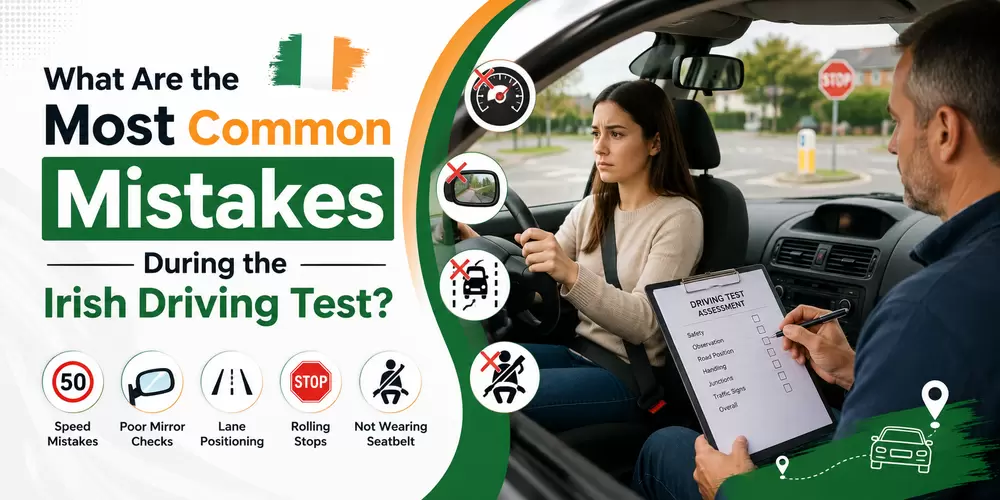
What Are the Most Common Mistakes During the Irish Driving Test?
Getting behind the wheel for your driving test in Ireland can be a bit scary, you know, even for people who feel like they’re ready. Every year, thousands of learners across the country don’t pass their test not because they can’t drive, but because of small, avoidable mistakes that pop up when you’re under pressure. If you understand these usual slip-ups, it can be the difference between passing on your first go, or having to wait and book another slot, months later. Before you even reach the practical side, it’s smart to double check your paperwork and do your preparation properly, because a lot of candidates end up feeling stuck. Many people choose to get an Irish Theory Test, to grab a handy time and get past the long waiting queues, which is often the first real step toward getting your Ireland driving licence. In this post we’ll sort of go through the most common errors examiners notice on the Irish driving test, why they happen, and what you can do so they don’t.
Most Common Mistakes During the Irish Driving Test
1. Poor Observation at Junctions and Roundabouts
One of the biggest reasons candidates fail is not really observing enough. Examiners want you to be looking into mirrors, blind spots, and also junctions, properly before you move. A lot of learners just glance, then assume everything is fine, without properly reading the road, and that can cause you to pull out too soon, or miss a car coming your way. Practising the "mirror-signal-manoeuvre" rhythm until it feels natural is a must.
2. Poor Vehicle Control (Clutch Control and Gear Changes)
Stalling at junctions, jerky gear changes, or riding the clutch are really common, especially when someone is stressed or nervous. While one stall usually won’t end the test immediately, repeated stalling—especially in traffic or on hills—can quickly show that your control isn’t solid, and it can stack up fast into a failure.
3. Incorrect Positioning on the Road
Going too far left, hugging the centre line, or not getting your road position right for turns happens a lot. Examiners pay close attention to lane discipline, especially around roundabouts and at multi-lane junctions. Many test candidates just haven’t driven those roads enough, or on unfamiliar routes, so it’s worth doing practice loops of test routes in your own time before the big day.
4. Failing to Follow Speed Limits Appropriately
Driving too slowly can be just as bad as speeding. People who are overly cautious may end up crawling well under the limit, and examiners can mark it as lack of confidence or awareness. On the flip side, misreading speed when you approach bends, or when you’re nearing junctions, is often treated as a serious issue. The key is matching your speed to the conditions, not only to the posted number.
5. Weak Reversing and Parking Manoeuvres
Reverse parking, turning in the road, and hill starts are manoeuvres many candidates underestimate, like they think they’ll be “fine on the day”. But poor observation while reversing, turning the wheel too much, or losing control during these parts are some of the most frequent causes of a failure. These manoeuvres should be practised again and again until they become automatic.
6. Nervousness and Panic Under Pressure
Test Day nerves hit almost everyone, but some people let the anxiety fully take over the driving. Suddenly braking, waiting too long at junctions, or forgetting simple checks are often connected to nerves more than actual driving ability. Doing mock tests with a qualified instructor can help you feel what real pressure is like, and build calmer habits.
7. Not Understanding the Rules of the Road
Ireland’s Rules of the Road have specific bits that trip up many learners, especially those who moved from abroad and are adjusting to a new setup. That’s one reason why understanding the Irish driving licence process properly matters just as much as learning the practical skills. A lot of failures come from small misunderstandings, like the wrong priority at unmarked junctions, or misjudging yellow box junctions.
8. Skipping Proper Theory Preparation
The theory test is supposed to create a solid base before you ever sit the practical, yet many candidates treat it like it doesn’t really count. If your theory knowledge is weak, it tends to show up later, as poor choices on the road. Booking your test slot early, revising bit by bit, and using official materials through the NDLS driving licence system can set you up for long-term success, even before you think too hard about your practical test date.
9. Documentation and Eligibility Issues
It’s surprising, but some candidates fail before they even finish the test because of paperwork problems. Things like an incorrect learner permit, expired documents, or not meeting eligibility rules. This is especially relevant for the Irish driving licence for foreigners, where exchanging a foreign licence, or meeting residency requirements, can feel confusing. If you’ve recently moved and you’re still sorting out your immigration status, it’s a good idea to look into how to get your Resident permit, as part of making sure your documentation is fully in order before your test date.
Final Thoughts
Passing your Irish driving test really comes down to a blend of solid technical skill, calm judgement, and that real familiar feel for the road rules. Most people don’t fail because they can’t drive its usually because little, preventable mistakes stack up, and on test day that pressure makes everything feel louder. With steady practice, good theory prep, and the right paperwork in order, you’ll be in a way better place to pass, with confidence.
Also if you’re just starting out on your learner journey, or you’re trying to figure out Driving Licences in Ireland as a newcomer, having the correct guidance is a big deal. For step-by-step support with Irish driver licence online applications, theory test bookings, and residency documentation, irelandpassportlicenceguide.com has resources made to help you glide through the full process without getting stuck or unsure.
Frequently Asked Questions (FAQs)
1. How many attempts are allowed for the Irish driving test?
There’s no official cap on attempts, but each failed test means a new booking plus extra fees, so real preparation counts every single time you go back out.
2. What is the pass rate for the Irish driving test?
Pass rates differ by test centre and category but generally, about half of candidates pass on their first try. That kinda shows how common those avoidable slip ups can be, even for people who are capable.
3. Can I take the driving test in my own car?
Yes, provided the car is roadworthy, insured for test use, taxed, and shows the proper L-plates (or N-plates where relevant).
4. How long does the practical driving test take in Ireland?
It usually lasts around 30 to 40 minutes, and that includes a quick eyesight check, a reversing exercise, and a general assessment on real roads.
5. Do I need to pass the theory test before booking a practical test?
Yes, theory has to be passed first, before you can apply for a learner permit, and later book the practical driving test.
6. What happens if I fail the driving test due to a minor fault?
Minor faults usually won’t fail you on their own, unless they build up too much or show up again, in a way that looks like a steady pattern of control problems or attention slip.
7. Is the driving test different for people relocating to Ireland?
It may be, particularly around licence exchange rules, the residency evidence you’ll need, and the eligibility criteria. Those details can shift depending on where you’re coming from.
8. Where can I get help navigating the Irish driving licence process?
You can use services like irelandpassportlicenceguide.com which can walk you through theory test bookings, paperwork, and the full licensing journey from start to finish.

